


Many people notice that two devices set to the same temperature can behave completely differently. One produces dense vapor instantly while another feels weak or delayed. This is not a faulty device — it is physics. In this heat flux explained guide, we explore the pivotal role of heat flux in vaporization. We will uncover the intricate relationship between heat transfer, material properties, and user techniques, enhancing your understanding of vaporization dynamics.
More inhalation technique guides: Smoke / Vape / Blaze
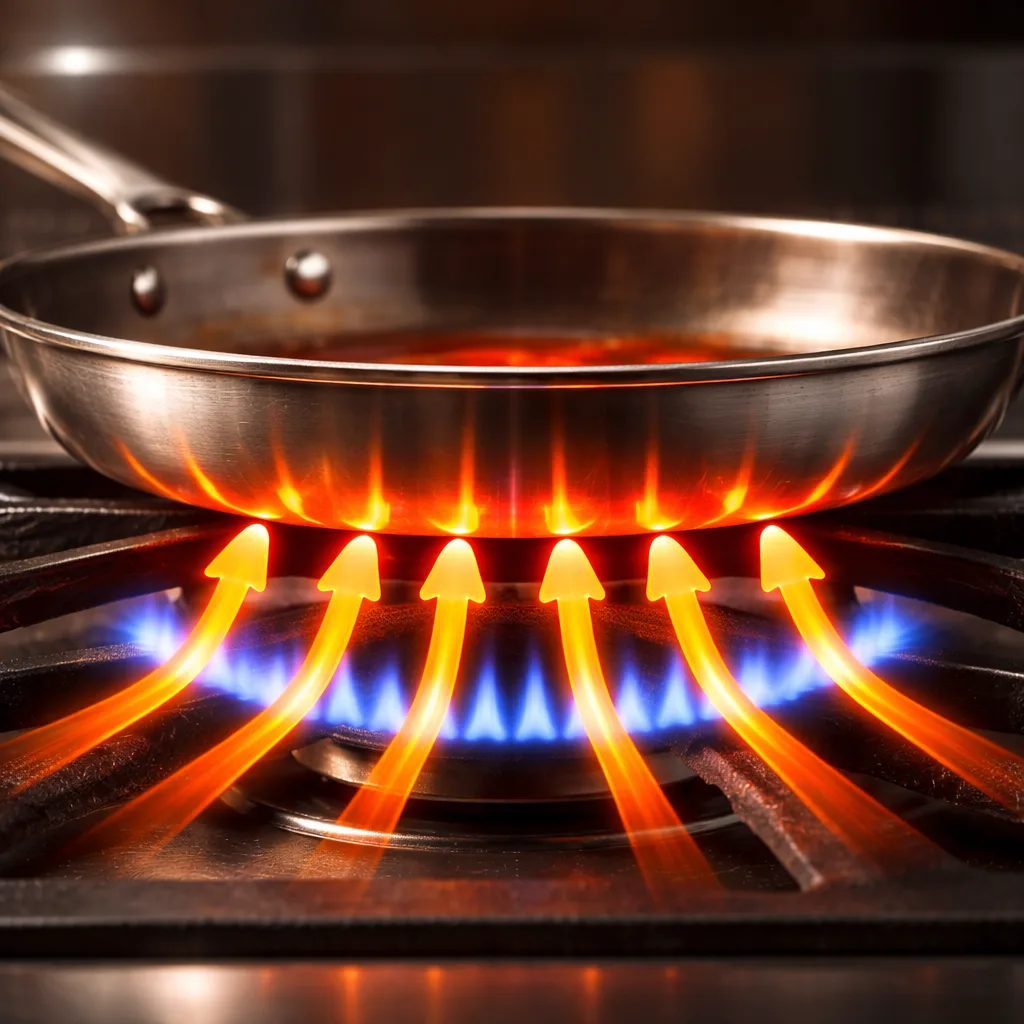
Temperature vs Heat Transfer
Understanding Heat Flux in Everyday Terms
In vaporization, the efficiency of heat flux can mean the difference between a satisfying experience and a disappointing one. Understanding heat flux explained can help you make better choices regarding your devices and materials.
Heat transfer can be compared to a race. If one runner has a clear and straight path while another has to navigate obstacles, the first will obviously reach the finish line faster. In vaporization, the efficiency of heat transfer is paramount; obstacles might include material density or moisture content, both of which can slow down the vaporization process.
To better grasp what heat flux is, think about cooking. When you put a pot on the stove, the heat doesn’t just instantly warm the pot; it takes time for the heat to penetrate the material and start warming the water inside. Similarly, in vaporization, the speed at which heat travels into the cannabis material plays a crucial role. For example, using a stove with a high BTU output can heat the pot faster compared to a camping stove, illustrating how different energy inputs affect the final outcome. The same principles apply to your vaping devices.
Temperature tells you how hot a surface is. Heat flux describes how quickly energy moves from that surface into plant material or concentrate.
They are related but not identical.
During vaporization:
- Energy moves into the material
- Energy escapes into surrounding air
- Energy leaves as vapor forms
If heat arrives slowly, material warms without producing much vapor. If heat arrives fast enough, compounds evaporate immediately.
This is the central idea behind heat flux explained: the rate of energy delivery determines vapor production more than the number on a screen.
Real-World Applications of Heat Flux Understanding
During the vaporization process, understanding how heat flux explained affects energy delivery is crucial. If heat is transferred slowly, the material might not vaporize efficiently, leading to less satisfying results.
In practical terms, understanding heat flux can help users identify and troubleshoot common issues. For instance, if a user realizes their device is underperforming, they might reconsider their choice of materials or even explore different devices that operate with higher thermal conductivity. This knowledge can lead to better experiences and enhanced satisfaction with cannabis consumption.
Additionally, analyzing heat flux can inform better inhalation techniques. For example, users can experiment with varying their draw speed, as a faster draw might help to maintain a consistent heat flow, thereby producing better vapor density and flavor. Slower draws can allow for more gentle heating, which might be desirable for certain materials, especially when aiming for specific terpenes or cannabinoids.
Why Heat Flux Matters
Consider the scenario of a water heater. The same amount of water can heat differently in various types of heaters. A tankless heater heats water on demand and may deliver hot water faster than a traditional tank model that requires time to warm up. This is akin to how devices with different material compositions and heating technologies affect vapor production. Understanding these differences is essential for choosing the right device for your needs.
For vapor to form, incoming energy must exceed energy lost to air and evaporation. Materials differ in how quickly they can supply this energy.
The key question becomes:
How fast can the device move heat into the load?
The Importance of Heat Flux Explained
Grasping the concept of heat flux explained allows users to optimize their vaping experience. By selecting devices that excel in heat flux, users can ensure a more consistent and enjoyable vaporization process.
This depends heavily on thermal conductivity and heat capacity.
How Materials Change Vaporization
Different materials produce different vapor behavior even at identical temperatures.
Low Conductivity Materials
Examples: glass or quartz-like materials
Behavior
- Slower vapor production
- Requires higher temperature settings
- Gentler extraction
These materials heat up but struggle to deliver energy quickly.
Medium Conductivity Materials
Examples: aluminum oxide ceramics
Behavior
- More consistent extraction
- Moderate vapor density
- Improved responsiveness
Energy transfer improves but still benefits from higher temperatures.
High Conductivity Materials
Examples: advanced ceramics and engineered thermal materials
Behavior
- Immediate vapor formation
- Effective lower temperature operation
- Even extraction
Energy reaches material rapidly, so vapor forms sooner.
Why Identical Temperatures Feel Different
Two devices reading the same temperature may behave differently because they deliver heat at different speeds.
- Slow transfer → delayed vapor
- Fast transfer → instant vapor
Nothing is broken — the energy delivery rate is different.
Different materials have varying thermal properties that influence heat flux explained in practical applications. For instance, a high-conductivity material will facilitate faster heat transfer compared to one that conducts poorly, impacting the vaporization process.
Practical Takeaways
Understanding heat-flux-explained helps with troubleshooting:
- Weak vapor may be energy transfer, not temperature
- Raising temperature compensates for slow materials
- Efficient materials allow lower temperature sessions
Instead of only increasing temperature, consider the heating characteristics of the device.
Heating Style Also Matters
Heat transfer interacts with heating method:
- Conduction relies heavily on material contact
- Convection depends on airflow energy delivery
- Hybrid systems combine both behaviors
Different systems can show the same temperature yet produce different results.
FAQ
Practical Applications of Heat Flux Explained
Understanding how to manipulate heat flux can lead to better outcomes in vapor production. For example, adjusting your draw speed can maintain consistent heat flow, thus enhancing the overall density and flavor of the vapor.
Why does one vape feel stronger at the same setting?
It transfers heat faster into the material.
Does higher temperature always mean more vapor?
Furthermore, exploring different temperatures can yield varying flavor experiences. Lower temperatures tend to preserve terpenes, resulting in a more flavorful vapor, while higher temperatures can produce larger vapor clouds but might sacrifice some flavor. Users should take the time to experiment with different settings and devices to find what works best for their personal preferences.
No. Faster heat delivery can produce more vapor at lower temperatures.
Optimizing Your Vaping Experience
Choosing the right device goes beyond just looking at temperature settings. Users can optimize their vaping experience by considering factors like airflow and material composition. Different types of herbs or concentrates might require unique approaches to achieve the best results. For example, when using denser materials, users might benefit from a device that combines both conduction and convection heating methods to facilitate optimal heat transfer.
Is this only about concentrates?
No. The same principle applies to dry herb vaporization.
Can airflow affect heat transfer?
Yes. Faster airflow removes heat faster, reducing vapor density.
What does heat flux mean simply?
What is Heat Flux Explained?
To fully understand the concept of heat flux, consider it as the rate at which heat energy moves through a substance during vaporization. It’s critical to recognize that heat flux explained relates not only to temperature settings but also to the physical characteristics of the materials involved.
It is how quickly heat moves into the material, not how hot the heater is.
Enhancing Your Knowledge About Materials
In conclusion, heat flux explained is a vital concept for anyone looking to enhance their cannabis consumption experience. By being aware of how different materials and techniques influence heat transfer, users can make informed choices for better vaping outcomes.
Delving deeper into how various materials affect heat flux can greatly enhance your vaping experience. Users should familiarize themselves with terms like thermal conductivity and heat capacity. Understanding these concepts can help users select devices that align with their vaporizing preferences, whether they prioritize flavor, vapor density, or overall efficiency.
References
https://www.cdc.gov/marijuana/
https://www.canada.ca/en/health-canada/services/drugs-medication/cannabis/health-effects.html
Conclusion: The Importance of Heat Flux Explained
As we’ve discussed in this comprehensive guide, the phenomenon of heat flux is a critical component that influences vapor production. Recognizing the impact of material choice, heat transfer rates, and inhalation techniques can significantly enhance your overall experience with cannabis consumption. By applying the principles of heat flux explained, users can make informed decisions about their devices and techniques, leading to improved satisfaction and enjoyment from each session.
By applying the principles of heat flux explained, users can truly elevate their sessions, ensuring greater enjoyment and satisfaction with each inhale.
Purchase Links
Save 15% on your purchase at JCVAP with coupon code herbistry420
- 🛒 To pick up a JCVAP Grade D Insert for Pockety or Puffco Peak Pro please visit – https://bit.ly/4pKlOiL
- 🛒 To pick up a JCVAP Grade C Insert for Pockety or Puffco Peak Pro please visit – https://bit.ly/4pKoyg1
- 🛒 To pick up a JCVAP Grade B Insert for Pockety or Puffco Peak Pro please visit – https://bit.ly/4pZ79jK
- 🛒 To pick up a JCVAP Grade A Insert for Pockety or Puffco Peak Pro please visit – https://bit.ly/4aruoyg
- 🛒 To pick up a JCVAP ICA 5D V2 Chamber with Diamondium Grade D Insert for Pockety and Peak Pro please visit – https://bit.ly/3MIzpIZ





Add comment