

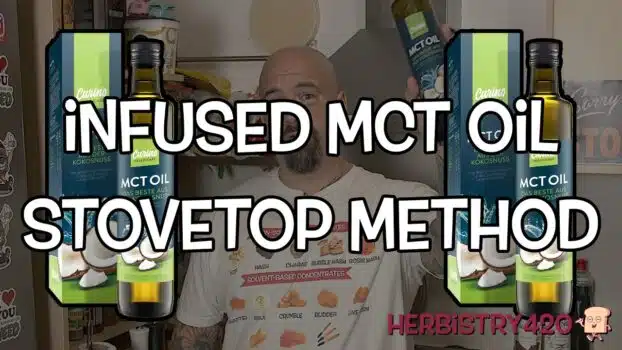



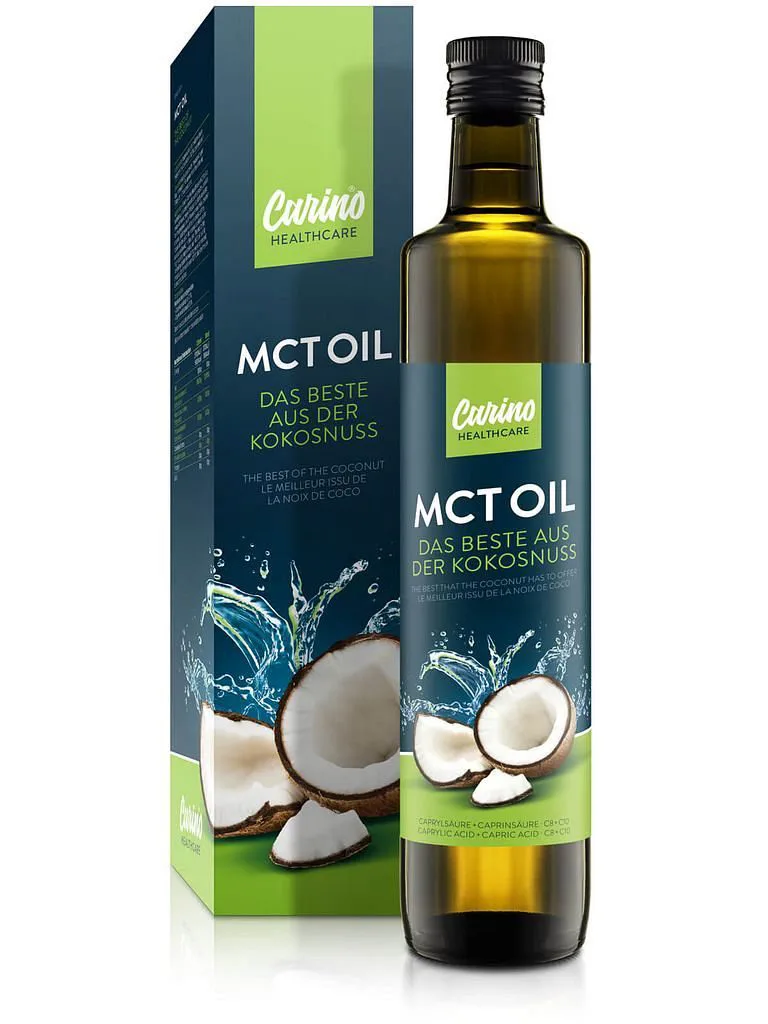
If you want to know how to make infused MCT oil on the stovetop, this is the guide for you. Fordee at Herbistry420 made this video after being asked how to do it without a machine — and he is honest about the trade-offs: it works, but it requires attention. Here is the complete method, from equipment to finished oil.
What You Need to Make How to Make Infused MCT Oil
Before starting, gather these: a pot with pour spouts or lips (easier to strain later), a digital thermometer, a silicone spatula, cheesecloth, a bottle funnel, your MCT oil, and your decarbed cannabis material. That is the whole setup. The thermometer is the only non-obvious piece of equipment — without it, managing temperature on the stovetop is guesswork.
5 Easy Steps: How to Make Infused MCT Oil on the Stovetop
- Measure your MCT oil and decarbed cannabis — Fordee used 125ml (half a cup) of MCT oil and 10 grams of 45% hash, which is roughly 4,500mg before accounting for infusion loss (expect 20–30% less in the final product). Use flower, hash, or a combination — color will vary (hash makes it brown) but potency is all that matters. If you need to calculate exact dosing, use a cannabis calculator like the one at Scientific Edibles.
- Heat to temperature and start the clock — Add your MCT oil to the pot, drop in the thermometer, and heat on medium. Your target is to stay below 185°F (85°C) — this preserves cannabinoids without burning them off. Start at a lower heat setting to avoid overshooting. If the temperature spikes over 185°F, slide the pot off the burner for a moment until it drops back down. The one-hour timer starts once you have added your cannabis and are in the target temperature zone.
- Stir every 10 minutes for 1 hour — Every ten minutes, give the mixture a 30-second stir with your silicone spatula. You are keeping the infusion moving and ensuring even contact between the oil and cannabis. This is not a set-it-and-forget-it method — monitor the thermometer and adjust your burner throughout. Fordee ended up using the lowest possible burner setting and still moved the pot on and off periodically to stay below 185°F.
- Add lecithin for better bioavailability (optional but recommended) — Add about half a tablespoon of lecithin per half cup of oil. MCT oil and cannabis are both oils so they do not strictly need an emulsifier, but lecithin increases the bioavailability of THC and helps it distribute more evenly. Add it at the beginning or partway through — either works.
- Strain, cool, and save the pulp — After an hour, set up your cheesecloth over the bottle funnel above a jar. Pour the hot oil through and let it strain. The filtered liquid is your finished infused MCT oil. Do not throw away the pulp — it still has cannabinoids and works well in baked goods like cookies or cakes. Air dry it on parchment paper for a day or two before using.
Temperature Tips When You Make Infused MCT Oil on the Stove
The biggest challenge when learning how to make infused MCT oil on the stovetop is temperature management. Every burner and pot behaves differently. A thick pot retains heat longer — a thin pot swings faster. Fordee used an induction burner and found that even the lowest setting pushed past 185°F without intervention. His verdict: the stovetop method works, but a dedicated machine like the Magical Butter Machine or Popnoids handles small batches with much less effort. For a one-off batch or when you do not have a machine, the stovetop method is a solid option.
Frequently Asked Questions
How to make infused MCT oil: what temperature should you use?
Keep the oil below 185°F (85°C) during infusion. Going higher risks degrading cannabinoids. If the temperature spikes, move the pot off the heat for a few seconds until it drops back into range. Monitor continuously — do not walk away from the stove.
Can I use flower instead of hash?
Yes. Flower, hash, or a combination all work. Hash gives the oil a brownish colour. Flower results in more plant material to strain out and a greener tint. Make sure your material is fully decarboxylated before infusing — this activates the THC so it works when consumed orally.
Why add lecithin to cannabis MCT oil?
Lecithin increases the bioavailability of THC and helps it distribute evenly throughout the oil. Since MCT oil and cannabis are both oils, the emulsification is less critical than in a water-based recipe, but the bioavailability boost is a genuine benefit worth adding.
What do I do with the pulp after straining?
Save it. The strained pulp still has cannabinoids and works well in baked goods like cookies or cakes. Let it air dry on parchment paper for one to two days, then break it up fine and mix directly into your recipe — no need to re-infuse butter.
References
Learn More on Herbistry420
Purchase Links
Save 5% on your POT by Noids by using coupon code herbistry420
🛒 To pick up the POT by Noids please visit – https://bit.ly/4orC6Nf
Support Herbistry420 by visiting our Cannabis Apparel Store, we have t-shirts, hoodies, pants, towels, you name it!
Note: Some links are affiliate links. Purchases through these links support the channel at no extra cost to you.
Add comment